
The Challenge
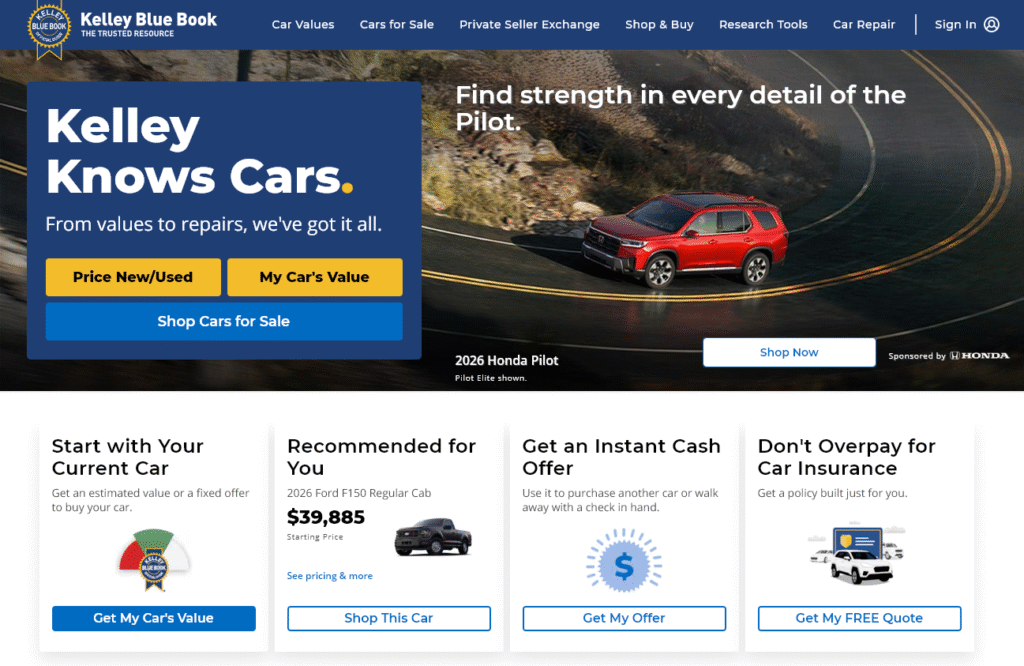
At Kelley Blue Book, our products had grown quickly across a lot of different areas of KBB.com—pricing, shopping, service, and ownership—but they weren’t growing together. Each team was solving similar design problems in their own way, which led to inconsistent experiences and a lot of duplicated work.
We needed a design system that could bring everything together, help teams move faster, and still give them enough flexibility to build what their products needed.
Our Research & Insights
We started by taking a hard look at what already existed. We audited live products, reviewed legacy designs, and talked directly with designers, engineers, and product partners.
A few things became clear pretty quickly:
- Teams were spending a lot of time rebuilding the same components
- There wasn’t a shared set of patterns people trusted
- Designers and engineers wanted clarity and speed more than anything
- Different product areas had different needs, but shared the same foundations
The big takeaway was that the system couldn’t be too rigid. It needed strong foundations, but enough flexibility so teams didn’t feel blocked by it.
The Solution
That’s where the Argo Design System came in. We designed it from the ground up to be modular, practical, and easy to adopt.
We focused on three main areas:
- Foundations like typography, color, spacing, and motion that aligned with the KBB brand
- Core components that were reusable, accessible, and built in close partnership with engineering
- Widget libraries that designers could use when prototyping
- Guidelines and patterns that showed teams not just what components existed, but how and when to use them
Instead of trying to roll everything out at once, we introduced Argo gradually, starting with high-visibility areas so teams could see the value right away.
Results & Impact
Once Argo was in place, it became the shared language across teams. Designers and engineers could move faster because they weren’t starting from scratch every time.
We saw:
- Faster delivery and less rework
- More consistent experiences across products
- Easier onboarding for new team members
- Better collaboration between design and engineering
It also helped shift the culture from teams working in silos to teams building together.
Reflection
One of the biggest lessons was that a design system isn’t just a set of components—it’s a relationship with the teams using it. Adoption didn’t happen automatically; it took communication, iteration, and listening.
Overall, Argo showed that a thoughtful design system can make teams faster and improve the customer experience at the same time.
NOTE: Once Argo was finished, the company started looking more broadly across all brands. They are working on a similar design system that not only controls KBB, but also many of its partners.